

-
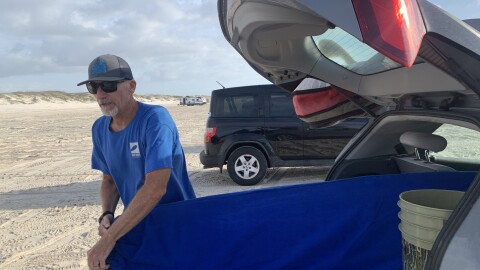 Avery ThompsonNeil McQueen learned to surf as a Texas teenager, and it changed his life – eventually pulling him away from a career as a plastics engineer and into the fight to save the very waters that shaped him.
 -
 NOAA via AP/NOAAThe largest impacts from the storm are expected to be concentrated south of the I-10 corridor.


-
 The pipeline would have been a part of Air Products and Chemicals’ carbon capture complex, which the company tabled last week.
 -
 The National Oceanic and Atmospheric Administration expects the oxygen-depleted zone to be about the size of the state of New Jersey.
 -
 We interviewed more than 50 experts to create a community toolkit. It lays out how ordinary people can respond — and how communities can prepare to handle projects beforehand.
 -
 The storm dumped rain across the region — some areas saw 6 to 9 inches in a matter of hours.
 -
 This is part 2 of our 3-part series about elements. Last time we met nitrogen, today, it’s partner in crime and in life – phosphorus.
 -
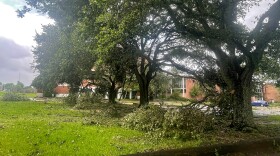 The National Weather Service says heavy rain from Tropical Storm Arthur's remnants is falling in southern Louisiana on Thursday morning and is expected to move into Mississippi, Alabama, Georgia and the Florida Panhandle.
 -
 The Natural Resources Conservation Service is a federal agency that helps farmers protect soil and water and fight climate change. Advocates say those goals are in jeopardy.
 -
 In this three-part series, we’re giving some of the most misunderstood characters on the periodic table a fuller story. We dive into the fascinating double lives of these elements that are both the makers and unmakers of our world.In part one, reporter Olga Loginova travels to Cape Cod to meet nitrogen. In this episode: we trudge through the marsh, avoid great white sharks, and find out how we harnessed the power of nitrogen, why that power turned against us, and what we can do about it.
 -
 Growers in New Orleans can often be kicked off the land they steward when they don’t have formal agreements, so some are turning to social media and the public for help.
 -
 WWNO/WRKF Coastal Desk reporter Michael McEwen spoke with Jay Grymes, Louisiana’s state climatologist, about the 2026 Atlantic hurricane season.


