Fifty days out from the Nov. 3 midterm elections, two dozen or so members of the Louisiana Republican Assembly gather at Agape Christian Fellowship Church in Metairie on a warm Monday evening in September.
Local candidates for school board, judge and the state legislature make their pitch to the New Orleans chapter of the “Republican Wing of the Republican Party,” as the cover of a brochure handed out before the meeting describes the group.
“We believe in nationalism,” the inside reads, alongside a list of values, including: “Decentralized Government,” “Sanctity of Life,” and a “Judeo-Christian Foundation.”
Candidate speeches touch on a mix of conservative themes: support for law enforcement; election integrity; immigration; concerns about socialism in school classrooms.

But one issue weaves through the rest: nondisclosure agreements.
“It's aggravating,” an audience member says during a Q&A. “This NDA thing is just over the top.”
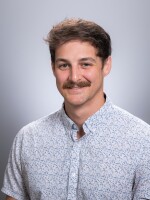
Michael Sigur, a candidate for State Representative in District 92 — which covers parts of Kenner, Metairie, and River Ridge in Jefferson Parish — tries to get ahead of questions from the group in his speech: “When I get there, I know I’m going to be asked to sign NDAs for projects. And I don’t want to do so unless I know it’s the right thing to do.”
Three days later, at the New Orleans Liberation Center, the Louisiana branch of the Party for Socialism and Liberation holds a forum titled, “How to Stop a Data Center.” One of the group’s organizers, Cecilia Paz, kicks off the meeting with a game of trivia.
“So let's talk about the lack of democracy here in Louisiana around these projects,” she says. “How many elected officials signed nondisclosure agreements?”
Someone in the audience calls out 50. Another guesses 65. Paz gives the correct answer of 54, citing a July investigation from the Gulf States Newsroom.

NDAs have become one of the few subjects that unite Louisiana’s political left and right. Those concerns followed a March Gulf States Newsroom investigation that revealed Gov. Jeff Landry’s administration’s extensive use of the agreements to keep negotiations on major projects secret, including Meta’s $50 billion data center in Richland Parish.
That concern has since rippled across the state as more projects concealed by NDAs have been announced: the Hyundai Steel mill in Ascension Parish, the Amazon data centers in Bossier and Caddo, the Applied Digital data center in Rapides and SpaceX in Vermilion.
NDAs have also become central to the fight for the state’s U.S. Senate seat. It’s drawn attention in Washington. Officials facing public pressure for signing the agreements are scrambling to get out of them.
In a recent Global Strategy Group survey of 902 likely voters, 93% said the state should be more transparent — and less than half think it is.
The role these agreements will play in influencing elections is about to be tested.

‘I never signed an NDA’

The biggest race where NDAs are taking center stage pits Democrat Jamie Davis against Republican U.S. Rep. Julia Letlow for the U.S. Senate seat previously held by Sen. Bill Cassidy. Republicans have won the last five Senate elections in Louisiana.
Davis is a farmer from Tensas Parish and a former parish police juror. He’s trying to become the first Black candidate elected to statewide office since Reconstruction, and he’s made NDAs a centerpiece of his efforts to attract Republican voters — featuring the issue in campaign ads and stump speeches.
“I never signed an NDA. I don’t plan to sign NDAs,” Davis said in an interview with the Gulf States Newsroom. “I believe that you can do the people’s business without NDAs.”
Davis is calling for a moratorium on new data centers and says he’ll introduce legislation to ban elected officials from signing NDAs. On the campaign trail, visiting every parish in the state, Davis said voters have raised NDAs repeatedly as a concern.
“It’s a big issue,” Davis said, with people “on both sides of the aisle” unhappy about the agreements.
“There’s a lot of people who are not pleased with that,” he said.

The “cardinal coup de grâce,” Davis said, is the perception that elected officials gain insider information after signing nondisclosure agreements and use it to financially benefit themselves.
A Gulf States Newsroom investigation found Letlow signed an NDA with Meta, then bought stock in the company before the deal was publicly announced, and continued to buy and sell Meta stock before disclosing the trades more than a year late.
“It seems with her, she is just hitching on to every opportunity that she can to pad her pockets,” Davis said.
A spokesperson for Letlow said she has no involvement in her stock portfolio, and the NDA played no part in them because she was unaware the trades were happening.
The Gulf States Newsroom has asked Letlow multiple times for an interview, both through her congressional office and her campaign. But she has declined every time. And she’s refusing to debate Davis ahead of the election.
At a recent campaign event, Letlow was asked about the NDA she signed with Meta by WRKF reporter Brooke Thorington. She refused to answer the question.
“I’m not here to talk about state politics,” Letlow said. “I’m running in a federal race, and I’ll talk about federal issues.”
Still, Davis faces long odds. Letlow has President Donald Trump’s endorsement, which helped her oust Sen. Bill Cassidy in the Republican primary. National forecasters rate the race as safe Republican, national Democrats are not sending money to Davis’ campaign and no Democratic Senate candidate has topped 44% in Louisiana since 2014.

‘Feet to the fire’

Frustration over NDAs extends beyond one election.
The practice of using the agreements to conceal project negotiations is becoming more common across the country. But it’s beginning to face opposition from the public and some lawmakers.
On Sept. 30, U.S. Rep. Jamie Raskin of Maryland, the top Democrat on the House Judiciary Committee, opened an inquiry into the use of NDAs by Meta, Amazon, Google and Oracle. His letters demanded copies of agreements the companies have signed with public officials.
The letters point to Louisiana, citing Gulf States Newsroom reporting, including Landry’s personal NDA with Meta and the town of Boyce, where residents learned of a multibillion-dollar data center only after fences went up. Raskin leads the minority on the committee and has no subpoena power, so the inquiry depends on the companies’ cooperation.
But in response to public backlash, some tech companies have vowed to stop using the agreements. Microsoft said in March that it would stop using them with local governments. Recently, Meta told WWL’s David Hammer that the company would be reviewing its use of NDAs.


Some Louisiana officials who signed the agreements are trying to get out of them as well. Records obtained by the Gulf States Newsroom show State Sen. Valerie Hodges, State Sen. Bill Wheat and State Rep. Joyce Walters requested to have their NDAs terminated following publication of the newsroom’s investigations. Hodges and Wheat did not respond to requests for comment.
In an interview with Gulf States Newsroom, Rep. Walters said she regrets signing the agreement. As a newer legislator, she assumed the NDA was standard procedure and believed it applied only to discussions about investments rapper 50 Cent was making in her district.
After public pressure from her constituents and after learning the NDA she signed was a “general” agreement that applied to any project negotiations, she asked to have hers rescinded.
“Hell no, I wouldn’t sign it again,” Walters said. “It looks like you are turning your back to the people. And that to me is an ethical issue; it's a moral issue. And I never want to have information that I can't share with my constituents.”
Some of her colleagues in the state legislature, she said, plan to introduce legislation in next year’s session to ban NDAs with elected officials. She also plans to support any bills addressing the use of the agreements.
Lt. Gov. Billy Nungesser also said he regrets signing an NDA. In an interview with the Gulf States Newsroom at his Metairie office, the state’s second-in-command said he signed one related to the LIV Golf tournament, which was ultimately canceled after the company filed for bankruptcy, leaving Louisiana on the hook for $1.2 million the state put up in incentives.
“Looking back, it wasn’t necessary,” Nungesser said.

What bothers him most is how little he can tell people. As he travels the state, residents ask him about water, power and tax incentives for the largest projects, and he can’t answer. He said he’s asked economic development officials for information, but even he can’t get it.
“I guess that’s part of the NDAs,” he said.
Transparency is important to voters, Nungesser said, who “deserve to know” what’s coming to their communities and how they’ll be impacted.
“We've got a lot of full-page ads bragging about all these projects in the paper,” Nungesser said, referring to The Times-Picayune | The New Orleans Advocate, a newspaper with close business ties to Meta. “It'd be nice to see a full-page ad that says this plant's coming, here's the tax incentives we had to give them, here's the long-term benefit to Louisiana.”
For Nungesser, the place to fix it is the state legislature, and he expects to see the issue come up in next year’s legislative session and in local and state elections.
“Most public officials, not all, but a lot of them, only care about one thing: reelection,” Nungesser said. “And next year is an election year.”
The public, he said, should watch what happens in Baton Rouge and “hold our elected officials’ feet to the fire.”
This story was produced by the Gulf States Newsroom, a collaboration between Mississippi Public Broadcasting, WBHM in Alabama, WWNO and WRKF in Louisiana and NPR.